.svg)
Cyclists Without Borders started as a strategic question rather than a design brief. How could the work of Bicicletas Sin Fronteras expand beyond traditional donations and reach a wider international audience.
Bicicletas Sin Fronteras already had a powerful mission. The organisation provides bicycles to students in rural Senegal so they can reach school. But the challenge was not only operational. It was also about communication and positioning.
The idea behind Cyclists Without Borders was to build a bridge between the cycling culture in Europe and the educational mobility projects taking place in Senegal.
Instead of approaching the project as a charity campaign, the focus shifted towards building a community. Cyclists share a strong culture, rituals and a sense of belonging. That shared identity became the starting point for the branding strategy.
The role of design in this context was not limited to creating visual assets. It was about shaping a narrative and a system that could support a long term initiative.
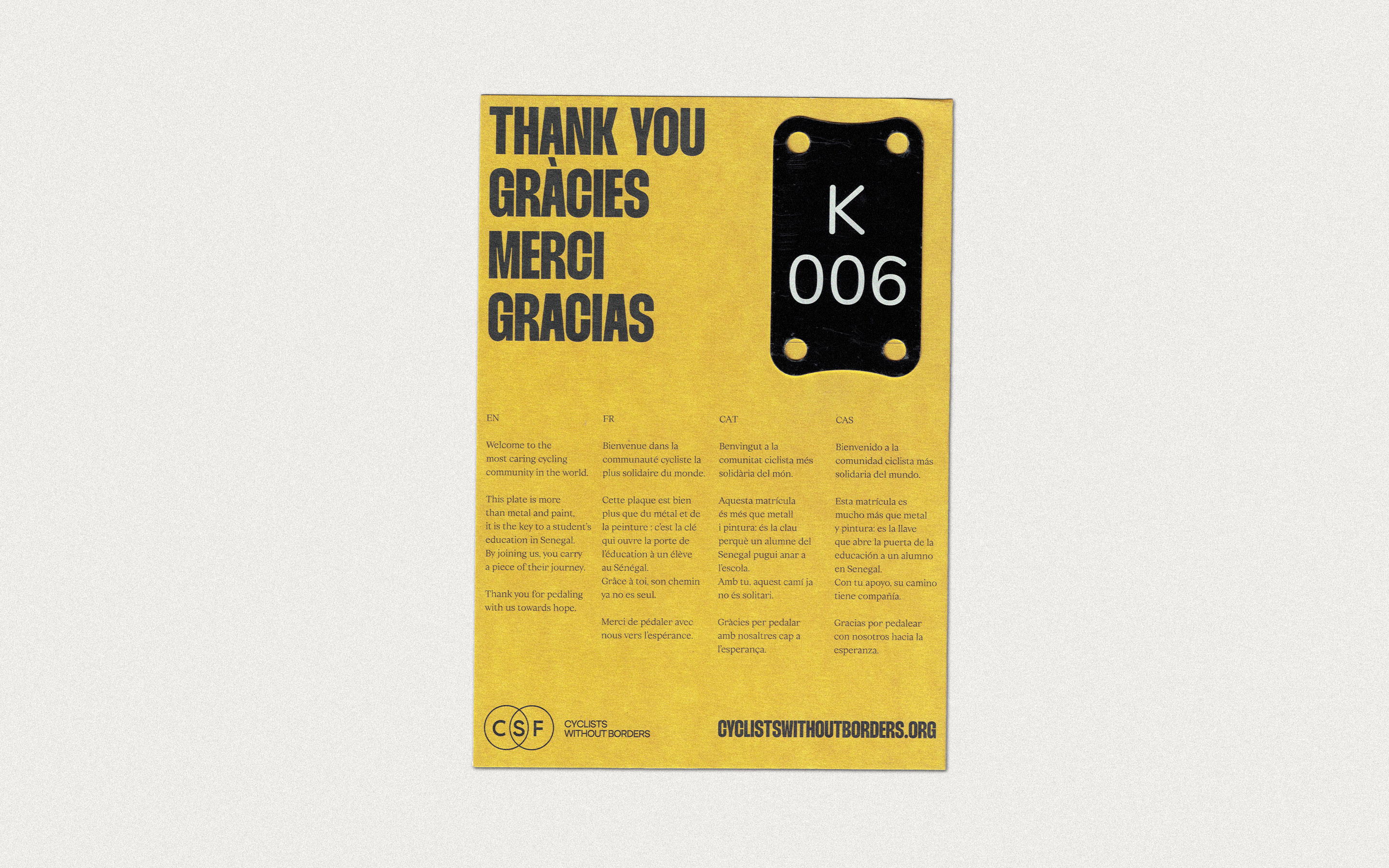
Cyclists Without Borders became a platform where cyclists can support the project through membership.
The concept transforms a dispersed community into a collective funding model capable of sustaining the delivery of bicycles.
Working on this project reinforced an important idea about branding. Sometimes the most powerful identity systems emerge not from aesthetics but from the behaviour of the community itself.